Nitrates in Vegetable Farming: Balancing Benefits and Risks for Sustainable Agriculture
Discover the essential role of nitrates in vegetable farming, from boosting plant growth to health benefits and risks. Learn best practices for sustainable management and safe produce.
Introduction
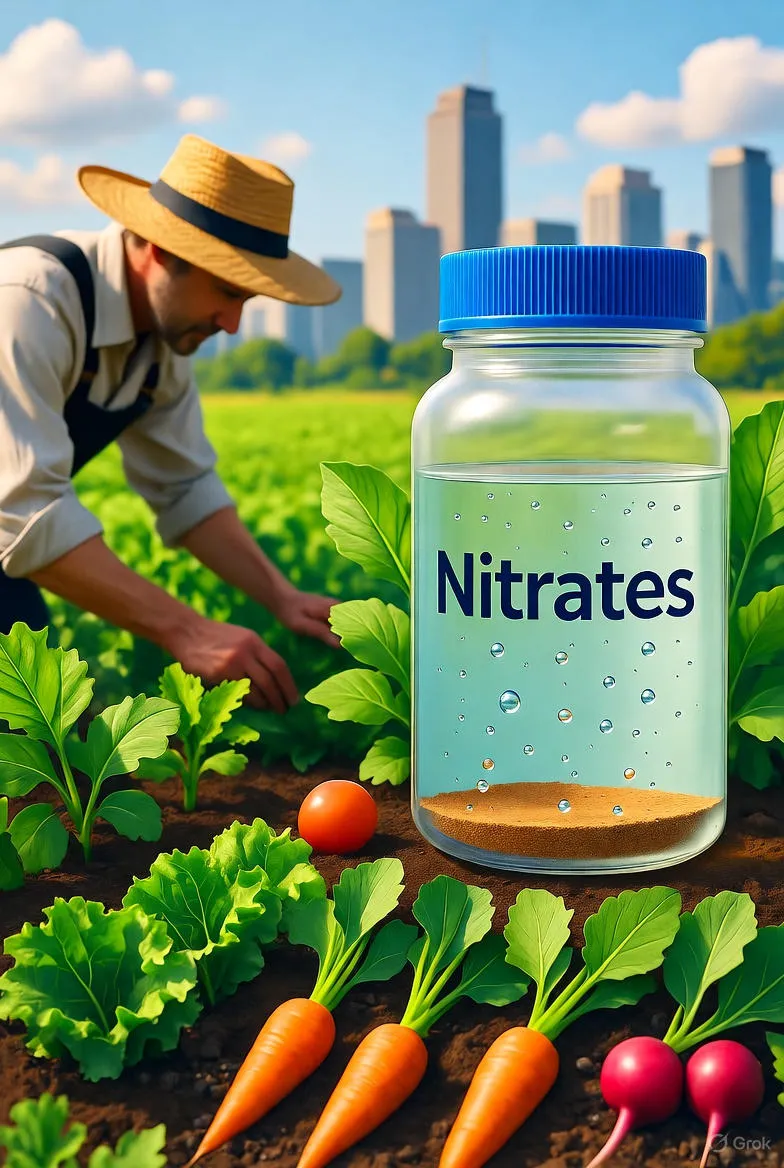
In the world of vegetable farming, nitrates play a pivotal role as essential nutrients that fuel plant growth and contribute to bountiful harvests. These compounds, often derived from fertilizers, are absorbed by plants to support vital physiological processes. However, the story of nitrates is not without complexity. While they are indispensable for agriculture, excessive levels in vegetables can raise concerns about human health and environmental impact. This article explores the multifaceted nature of nitrates in vegetable farming, shedding light on their benefits, potential risks, and practical strategies for responsible management. By understanding this balance, farmers can optimize yields while safeguarding soil health and consumer well-being.
What Are Nitrates and How Do They Function in Plants?
Nitrates, chemically known as NO₃⁻ ions, are a form of nitrogen that plants readily uptake from the soil. Nitrogen is one of the six macronutrients required for plant development, alongside carbon, hydrogen, oxygen, phosphorus, and potassium. In vegetable crops like spinach, lettuce, beets, and leafy greens, nitrates serve as a primary building block for amino acids, proteins, and chlorophyll—the green pigment essential for photosynthesis.
Once absorbed through the roots, nitrates are transported to the leaves where they are reduced to nitrites and then to ammonium, which is incorporated into organic compounds. This process not only promotes vigorous growth but also enhances the nutritional quality of the produce. For instance, adequate nitrate supply leads to lush, green foliage and robust root systems, directly translating to higher market value for farmers. Without sufficient nitrates, vegetables may exhibit stunted growth, yellowing leaves (chlorosis), and reduced yields, underscoring their indispensable role in sustainable farming.
Interestingly, plants have evolved sophisticated mechanisms to regulate nitrate assimilation. Enzymes like nitrate reductase control the conversion rates, ensuring that excess nitrates are stored in vacuoles rather than accumulating harmfully. This natural buffering helps maintain equilibrium, but human interventions through fertilization can tip the scales.
Sources of Nitrates in Vegetable Farming
The primary source of nitrates in vegetable farming is synthetic fertilizers, such as ammonium nitrate or urea-based products, which break down into nitrates in the soil. Organic alternatives, including manure, compost, and green manures, also contribute nitrates through microbial decomposition. Natural soil nitrates arise from atmospheric deposition, lightning fixation, and the nitrogen cycle involving legumes that host symbiotic bacteria capable of fixing atmospheric nitrogen.
In intensive vegetable production systems, reliance on chemical fertilizers has surged to meet global food demands. According to agricultural data, vegetable farms apply an average of 100-200 kg of nitrogen per hectare annually, much of it in nitrate form. While this boosts productivity, it also increases the risk of nitrate leaching into groundwater, a phenomenon exacerbated by heavy rainfall or over-irrigation. Soil type plays a crucial role here; sandy soils with low organic matter retain nitrates poorly, leading to faster runoff, whereas clay-rich soils hold them longer but may promote denitrification—converting nitrates to gaseous nitrogen oxides.
Climate influences nitrate dynamics as well. Warmer temperatures accelerate mineralization, releasing more nitrates from organic matter, while cooler conditions slow uptake, potentially leading to buildup in crops. Farmers in regions like the Mediterranean or Pacific Northwest must tailor their approaches to these variables to prevent imbalances.
Health Benefits of Dietary Nitrates from Vegetables
Far from being mere agricultural inputs, nitrates in vegetables offer significant health perks when consumed in moderation. Once ingested, dietary nitrates from sources like arugula, celery, and radishes are converted by oral bacteria into nitrites, which then form nitric oxide in the body. Nitric oxide acts as a potent vasodilator, relaxing blood vessels and improving circulation.
Research highlights nitrates' cardiovascular advantages. Regular intake from nitrate-rich vegetables has been linked to lower blood pressure, reduced risk of heart disease, and enhanced exercise performance. Athletes often turn to beetroot juice—a nitrate powerhouse—for its ergogenic effects, boosting stamina by up to 16% in endurance activities. Beyond the heart, nitrates exhibit anti-inflammatory properties and may protect against neurodegenerative disorders by improving cerebral blood flow.
In the context of a balanced diet, the European Food Safety Authority (EFSA) emphasizes that the benefits of vegetable consumption far outweigh nitrate-related concerns. A diet high in leafy greens provides antioxidants like vitamin C, which inhibit the formation of potentially harmful nitrosamines from nitrites. Thus, nitrates contribute to the overall protective halo of plant-based eating, promoting longevity and vitality.
Potential Health Risks Associated with High Nitrate Levels
Despite their upsides, elevated nitrate concentrations in vegetables can pose risks, particularly for vulnerable populations. The chief concern is the conversion of nitrates to nitrites in the body, which can bind to hemoglobin, forming methemoglobin and impairing oxygen transport—a condition known as blue baby syndrome in infants. This risk is amplified in water sources contaminated by agricultural runoff, but vegetable-derived nitrates are generally less problematic due to their fiber and antioxidant matrix.
Another worry is the potential for nitrosamine formation, carcinogenic compounds arising when nitrites react with amines under acidic conditions, such as in the stomach. Epidemiological studies suggest a correlation between high-nitrate diets and gastric or colorectal cancers, though causation remains debated. Factors like cooking methods—frying versus steaming—can influence this risk, as heat may accelerate nitrosamine production.
Children, pregnant women, and those with gastrointestinal issues are most susceptible. Regulatory bodies like the World Health Organization set acceptable daily intakes at 3.7 mg/kg body weight for nitrates, ensuring that typical vegetable consumption stays well below thresholds. In practice, levels in most commercial vegetables hover around 200-500 mg/kg fresh weight, posing minimal threat when part of a varied diet.
Regulations and Monitoring Nitrate Levels in Produce
To mitigate risks, international standards govern nitrate content in vegetables. The European Union enforces maximum residue limits (MRLs) via Regulation (EC) No 1881/2006, capping spinach at 3,500 mg/kg during winter and rocket at 7,000 mg/kg. The U.S. Food and Drug Administration monitors through voluntary guidelines, focusing on imported goods and water quality under the Safe Drinking Water Act.
Farmers employ tools like ion-selective electrodes and spectroscopy for on-site testing, while labs use high-performance liquid chromatography for precision. Harvest timing is key; vegetables accumulate nitrates more in cooler months or shaded conditions, so sampling across growth stages ensures compliance. Certification programs, such as GlobalG.A.P., incentivize low-nitrate practices, enhancing market access for eco-conscious brands.
Consumer awareness drives progress too. Labeling initiatives highlight low-nitrate varieties, empowering shoppers to make informed choices. Ongoing research into genetic markers for low-accumulator crops promises future reductions without yield penalties.
Best Practices for Managing Nitrates in Vegetable Farming
Effective nitrate management hinges on precision and integration. Start with soil testing to gauge baseline levels, applying fertilizers only as needed—ideally split into multiple doses aligned with crop uptake peaks. Slow-release formulations, like coated urea, minimize leaching by synchronizing release with plant demand.
Precision agriculture technologies, including soil moisture sensors and variable-rate applicators, optimize delivery. For example, drip irrigation delivers water and nutrients directly to roots, reducing evaporation and runoff by up to 30%. Cover cropping with rye or clover between seasons scavenges residual nitrates, preventing them from washing away while building soil organic matter.
Organic farming shines here, relying on compost teas and biofertilizers to foster microbial activity that cycles nitrogen efficiently. Crop rotation disrupts pest cycles and balances nutrient loads; following nitrogen-hungry leafy greens with legumes replenishes soil naturally. Integrated pest management cuts fertilizer needs by curbing losses from diseased plants.
Post-harvest handling matters: quick cooling and light exposure post-harvest trigger nitrate conversion to proteins, lowering content by 20-40%. Farmers adopting these holistic strategies not only comply with regulations but also cut costs—over-fertilization wastes up to 50% of applied nitrogen—and bolster resilience against climate variability.
- Conduct regular soil tests: Every 1-2 years to tailor applications.
- Use balanced fertilizers: Combine N-P-K ratios suited to vegetable types.
- Implement cover crops: To trap excess nitrates and enhance biodiversity.
- Monitor weather patterns: Adjust irrigation during wet spells.
- Educate on harvest timing: Pick during peak sunlight hours for lower nitrates.
Sustainable Innovations and Future Outlook
Looking ahead, innovations like nanotechnology for targeted nutrient delivery and AI-driven predictive modeling are revolutionizing nitrate stewardship. Biostimulants derived from seaweed extracts enhance root efficiency, reducing fertilizer use by 15-20%. Collaborative efforts between farmers, researchers, and policymakers foster resilient systems, where nitrates serve as allies rather than adversaries.
In essence, vegetable farming's nitrate narrative is one of harmony—leveraging nature's chemistry for abundance while heeding limits for health and ecology. By embracing informed practices, the industry can cultivate a greener tomorrow.
(Word count: 1,248)